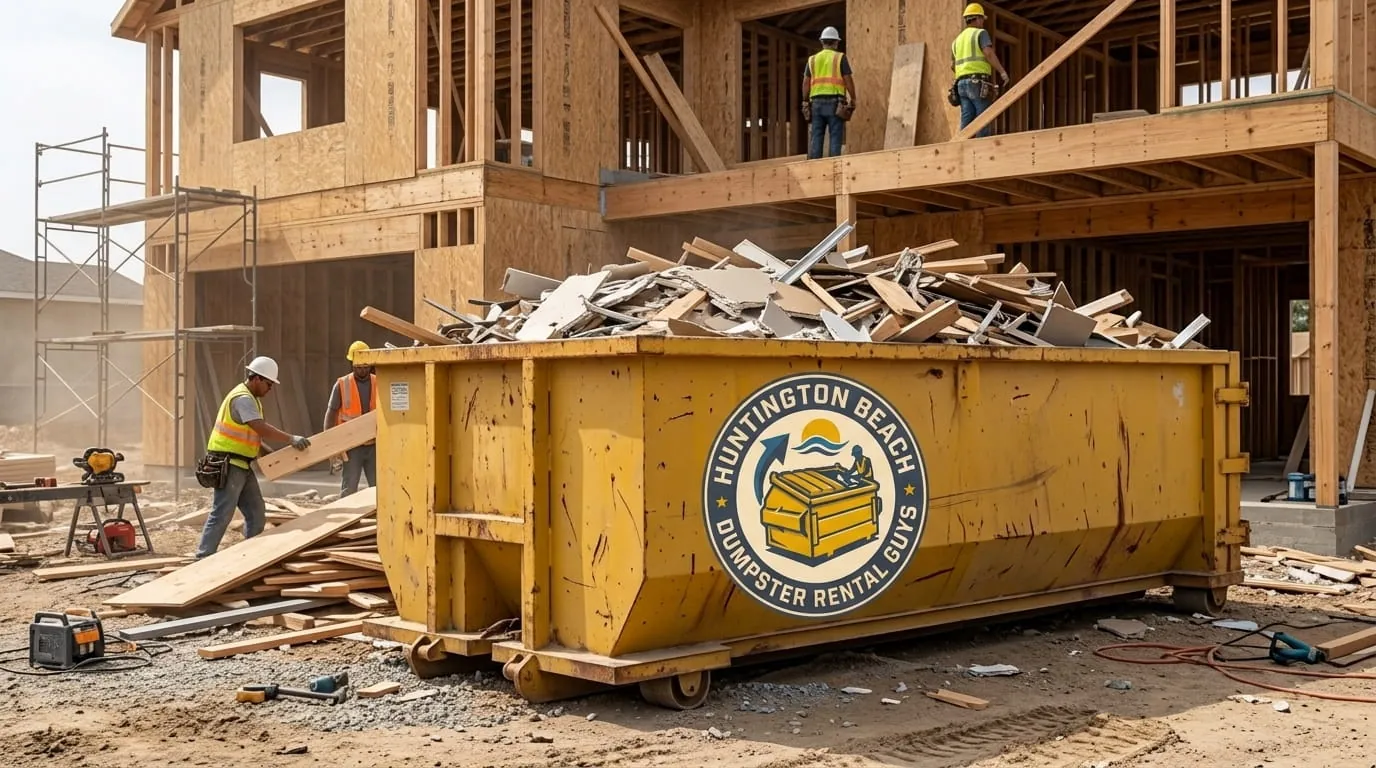
If you have run a remodel or a tear-out anywhere in Huntington Beach, you already know the debris pile tells the truth about the job. Snapped studs, busted stucco, old cabinets, torn-out carpet, a mountain of drywall scrap, and somewhere under all of it, the concrete from that patio nobody wanted anymore. Getting that mess off the site is easy to underthink. Getting it off the site the right way, so you stay compliant, keep the crew safe, and do not blow your disposal budget, takes a little planning.
This is a working guide for contractors and renovating homeowners on how to handle construction and demolition debris, known in the trade as C&D, without cutting corners you will pay for later.
What Counts as Construction & Demolition Debris
C&D debris is the material generated when you build, renovate, or demolish. On a typical Orange County job site it breaks down into a handful of streams, and knowing which is which matters because they do not all get handled the same way.
- Heavy inert material — concrete, brick, block, asphalt, tile, dirt, and rock. Dense, and the fastest way to overload a container.
- Wood — framing lumber, plywood, OSB, trim, and pallets. Clean wood is often recyclable; painted or treated wood is not the same animal.
- Drywall and plaster — light but bulky, and gypsum has its own recycling stream in California.
- Metal — rebar, ductwork, conduit, copper, flashing, and old appliances. This has scrap value, so keep it separate.
- Cardboard and clean packaging — from new fixtures, tile, and materials. Easy diversion win.
- Mixed and general refuse — carpet, insulation, laminate, and the odds and ends that do not sort neatly.
Then there is the material that does not belong in a debris box at all: paint, solvents, adhesives, batteries, fluorescent tubes, and anything with asbestos or lead. Those are hazardous waste, they have their own disposal channels, and dropping them in a dumpster is where compliance problems start.
Why You Cannot Just Landfill It All
The old approach of one big box, fill it with everything, haul it to the landfill does not fly in California anymore. The state has pushed construction and demolition waste diversion for years, and many Orange County cities require that a defined share of C&D material from permitted projects be recycled or diverted rather than buried. Huntington Beach and its neighbors tie this to the building permit process on a lot of jobs, which means the debris plan is part of the paperwork, not an afterthought.
The rule of thumb: if your project pulled a permit, assume someone may ask how the debris was diverted. Keeping your loads sorted and using a hauler that recycles is the difference between a clean sign-off and a headache.
Beyond the regulatory side, there is a plain economic reason. Landfill tipping fees are charged by weight, and inert material like concrete is heavy. Sending clean concrete to a recycler instead of the landfill is usually cheaper per ton, and clean loads of wood, metal, and cardboard divert weight that would otherwise cost you. Sorting is not just about compliance. It is about the invoice.
Separate Heavy From Light
The single most useful habit on a debris-heavy job is keeping your dense inert material apart from your bulky light material. Here is why it matters.
A dumpster has two limits: how much it can hold and how much it can weigh. Concrete, brick, and dirt hit the weight limit long before they fill the box. Drywall, wood, and general debris fill the box long before they hit the weight limit. Mix them and you get the worst of both worlds, a container that is heavy, only half full, and hard to haul legally.
The move is to keep heavy inert debris in its own dedicated container. For concrete, block, and asphalt specifically, our concrete and heavy debris service uses smaller dedicated boxes built for dense loads, which keeps you under axle weight limits and out of overage territory. Your lighter mixed debris then goes in a larger box where volume is the constraint, not tonnage. Two right-sized streams almost always beat one overloaded catch-all.
Debris Type to Handling: Quick Reference
| Debris Type | Weight Profile | How to Handle It |
|---|---|---|
| Concrete, brick, asphalt | Very heavy | Dedicated heavy-debris box, keep clean for recycling |
| Dirt, rock, sod | Very heavy | Separate load; do not mix with general debris |
| Framing lumber, plywood | Light to medium | Keep clean wood separate for diversion where possible |
| Drywall, plaster | Light, bulky | General or mixed box; gypsum recycles in CA |
| Metal, rebar, appliances | Medium | Sort out for scrap value; keep out of inert loads |
| Cardboard, packaging | Very light | Break down, recycle for easy diversion |
| Carpet, insulation, mixed | Light, bulky | General debris box |
| Paint, solvents, asbestos, batteries | Hazardous | Never in a dumpster; use proper hazmat channels |
Right-Sizing the Dumpster and Planning Swaps
Container sizing is where a lot of budgets go sideways. Order too small and you are paying for extra hauls and the crew is stacking debris on the ground waiting on a swap. Order too big for heavy material and you never get to fill it because you hit weight first.
For most whole-room remodels, kitchen and bath tear-outs, roofing jobs, and mid-size demolition, a 30-yard dumpster is the workhorse. It gives you the volume to handle bulky light debris like drywall, cabinets, and framing without a swap mid-project. For concrete and other dense material, you want a smaller dedicated box regardless of how much volume you have, because weight is the limit.
On bigger tear-outs, plan your swaps in advance rather than reacting when the box is full. A good rental partner will stage a full-for-empty swap so your crew never stops working. If you are running a full teardown, our demolition debris removal service is set up to keep containers cycling through a high-volume site. When in doubt on sizing, call and describe the job, it is a two-minute conversation that saves a wasted haul. Reach us at (714) 475-1269.
Keeping the Job Site Safe and Compliant
A debris box is a safety tool as much as a disposal tool. A few things that keep HB job sites clean and inspection-ready:
- Do not overfill. Debris above the rim cannot be hauled legally and it is a road hazard. Fill to the line, not above it.
- Watch the placement. On a street or in a right-of-way, Huntington Beach may require a permit for a placed container. On a driveway or private lot you are usually clear. Plan the drop spot before the box arrives.
- Protect the surface. Ask for boards under the container so you are not gouging a homeowner's driveway or a fresh apron.
- Keep walk paths clear. A staged, sorted pile beats debris scattered across a job site every time, for tripping hazards and for loading speed.
- Keep hazardous material out. One can of solvent or a sheet of suspected asbestos can contaminate a whole load and turn a routine haul into a compliance problem.
Controlling the Cost
Disposal cost comes down to three things: weight, number of hauls, and contamination. You control all three.
Keep heavy inert material in its own clean load so it can be recycled at a lower rate instead of hitting landfill tonnage fees. Right-size the container so you are not paying for air or triggering overage weight charges. And keep loads clean, because a mixed load with hazardous material in it can get rejected or surcharged, which is the most expensive way to learn this lesson.
For contractors running steady work in Orange County, the biggest savings come from a repeatable system: a dedicated heavy box, a general debris box, planned swaps, and a hauler who recycles. Set that up once and every job runs cheaper and cleaner. Our construction dumpster rental service is built around exactly this kind of job-site workflow.
Do It Right the First Time
Disposing of construction debris the right way in Huntington Beach is not complicated once you have the system: know your debris streams, keep heavy separate from light, size the box to the job, plan your swaps, keep hazardous material out, and run clean loads. Do that and you stay compliant, keep the site safe, and keep the disposal line on your budget under control.
Need a container staged for your next tear-out or remodel? Talk to a local team that knows HB job sites. Call (714) 475-1269 or reach out through our contact page and we will get you the right box, sized right, dropped where you need it.

Founder, Huntington Beach Dumpster Rental Guys — sharing straight advice from more than 15 years of local hauling experience.