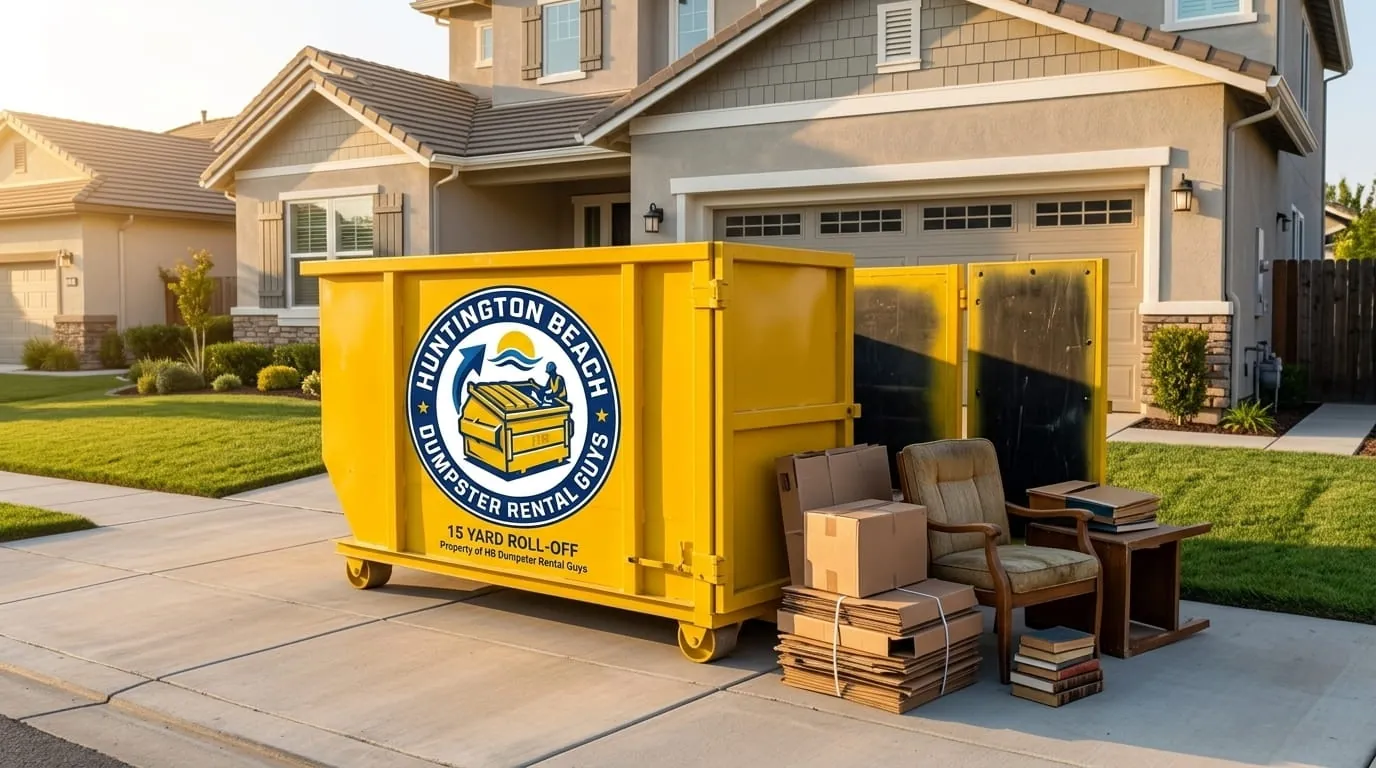
Clearing out an entire home is rarely just a logistics problem. Whether you are settling a parent's estate, handling a probate property, or helping a loved one downsize, you are also sorting through a lifetime of memories — often on a deadline, often while grieving. At Huntington Beach Dumpster Rental Guys, we have helped many local families through exactly this, and we know the work goes better when you have a plan. This estate cleanout checklist walks you through the whole process, from what to secure first to the last empty room.
Go slow with the decisions that matter and fast with the ones that don't. A stack of old magazines can be tossed in seconds. A shoebox of photographs deserves an afternoon. Knowing the difference is the real skill of an estate cleanout.
Before You Touch a Thing: Secure the Important Stuff First
The single biggest mistake families make is starting to throw things away before they have secured what is legally and financially important. Once a dumpster is loaded, there is no getting it back. Spend your first visit doing nothing but finding and protecting the essentials.
Documents and valuables to locate on day one
- Legal papers: the will or trust, deeds and property titles, vehicle titles, insurance policies, and any probate paperwork.
- Financial records: bank and investment statements, tax returns (keep at least the last several years), pension and Social Security documents, and unpaid bills.
- Identification: birth certificates, Social Security cards, passports, and military service records.
- Valuables: cash, jewelry, coins, precious metals, and small collectibles. Check unexpected hiding spots — inside books, taped under drawers, in coat pockets, freezer bags, and medicine cabinets.
- Keys and access: safe deposit box keys, spare car keys, and any storage-unit contracts.
Put everything you find into one labeled box that leaves the property with you each day. When in doubt about whether a document matters, keep it — you can shred it later once the estate is settled.
Make a Simple Plan (and Set Realistic Expectations)
A full-house cleanout for a long-occupied home typically takes days, not hours. Before the sorting begins, get organized:
- Confirm your authority. If the home is in probate, make sure the executor or personal representative has given the green light before anything is removed.
- Set your timeline. Are you selling the house, renting it, or moving in? Your end date drives everything else.
- Recruit help. Divide rooms among family members so no one person carries the whole emotional load.
- Gather supplies. Sturdy boxes, contractor bags, packing tape, markers, gloves, and colored sticky notes for the keep/donate/sell/toss system below.
- Line up your disposal. Book a roll-off dumpster so debris has somewhere to go the moment you start — nothing stalls a cleanout like a garage full of bags with no exit.
The Four-Pile Sorting System: Keep, Donate, Sell, Toss
Give every item a home in one of four categories. Assign a color to each and work one room at a time so decisions stay contained.
- Keep — items family members truly want or that hold real meaning. Be honest; "keep" should be the smallest pile, not the default.
- Sell — furniture in good shape, jewelry, tools, collectibles, and antiques. Consider an estate sale company for higher-value homes.
- Donate — usable clothing, kitchenware, books, and linens that others in Orange County can put to use.
- Toss — broken, stained, expired, or worn-out items and general debris. This is where your dumpster earns its keep.
If you get stuck on an item, set a timer. Most decisions do not deserve more than thirty seconds. For sentimental things, a quick photo lets you keep the memory without keeping the object.
Go Room by Room, in the Right Order
Working room by room keeps the job from feeling endless. We recommend starting with the lowest-emotion, highest-clutter spaces — garage, storage areas, and spare rooms — to build momentum before you reach the bedrooms and personal spaces. Save the most sentimental rooms for last, when your sorting muscles are warmed up. For a deeper walkthrough, our room-by-room home cleanout checklist breaks each space down further.
| Room | Typical Items | Approach |
|---|---|---|
| Garage & shed | Tools, paint, chemicals, lawn gear, boxes | Start here for easy wins. Set hazardous materials aside for proper disposal — they do not go in the dumpster. |
| Attic & storage | Holiday decor, old furniture, keepsakes | Bulky and dusty; wear a mask. Check every box for hidden valuables before tossing. |
| Kitchen | Small appliances, cookware, pantry, dishes | Donate usable items; toss expired food and worn cookware. Keep one set of quality pieces. |
| Living & dining | Furniture, electronics, books, decor | Sell or donate large furniture. Recycle old electronics responsibly. |
| Bedrooms | Clothing, linens, personal effects | Bag clothing for donation. Save the closet's sentimental corners for a calm moment. |
| Bathrooms | Toiletries, medications, towels | Toss expired products. Take unused medications to a pharmacy take-back, never the trash. |
| Office & paperwork | Files, mail, photos, records | Slow down here. Sort documents against your day-one checklist before anything is shredded. |
Your Quick Estate Cleanout Checklist
Print this and check it off as you go:
- □ Confirm legal authority to clear the property
- □ Locate and secure documents, IDs, and valuables
- □ Set a realistic timeline and recruit helpers
- □ Gather boxes, bags, and labeling supplies
- □ Book the right-size dumpster before you start
- □ Set up your keep / donate / sell / toss zones
- □ Work room by room, easiest spaces first
- □ Separate hazardous materials and electronics
- □ Schedule donation pickups and an estate sale if needed
- □ Do a final walkthrough before returning keys
Choosing the Right Dumpster Size (and When to Swap)
The most common question we hear is, "How big a dumpster do I need?" For a typical full-home estate cleanout, a 20-yard dumpster is the sweet spot — large enough for furniture, boxes, and general debris without overwhelming a residential driveway. For smaller condos or downsizing projects, a 10 or 15 yard may be plenty; for large homes packed to the rafters, step up to a 30 yard.
If you fill up mid-project, no problem. We offer dumpster swaps — we haul away the full container and drop a fresh one, so the work never stops. Not sure what you need? Call us at (714) 475-1269 and describe the home; we will recommend a size that fits your driveway and your budget. If you would rather not lift a finger, our junk removal team can do the loading for you.
Donation Options Around Orange County
Giving usable items a second life feels good and lightens your load. Locally, Goodwill of Orange County, Salvation Army, and Habitat for Humanity ReStore all accept furniture, housewares, and clothing, and several offer pickup for larger items. Local churches, shelters, and animal rescues often welcome linens, towels, and kitchen goods too. Call ahead to confirm what each location takes and whether they can pick up — scheduling a donation run before your final dumpster load keeps good items out of the landfill.
Emotional and Logistical Tips for a Kinder Cleanout
- Take breaks. This work is physically and emotionally heavy. Step outside, hydrate, and rest.
- Photograph memories. You can honor a keepsake with a picture and still let the object go.
- Share the stories. Invite family to claim meaningful items early to prevent later conflict.
- Don't rush grief. If a room is too much today, close the door and come back tomorrow.
- Ask for help. There is no prize for doing this alone.
When you are ready, we make the physical side simple. Learn more about our full-service estate cleanout support for Huntington Beach and Orange County, or reach out with your questions anytime. Our team understands what these projects mean to families, and we treat every home with the respect it deserves.
Ready to get started? Call Huntington Beach Dumpster Rental Guys at (714) 475-1269 for a right-sized dumpster and a plan that fits your timeline.

Founder, Huntington Beach Dumpster Rental Guys — sharing straight advice from more than 15 years of local hauling experience.