A roll-off dumpster is one of the handiest tools you can park in your driveway for a cleanout, remodel, or roofing job. It is also one of the heaviest. An empty 20-yard container already weighs a few thousand pounds, and once you start filling it with drywall, shingles, or old concrete, the load riding on those steel rails and wheels climbs fast. All of that weight lands on a few small contact points, and your driveway is what has to absorb it.
The good news: driveway damage during a dumpster rental is almost entirely preventable. After years of setting containers on driveways all over Huntington Beach and Orange County, we have learned exactly where things go wrong and how to keep your concrete, pavers, or asphalt looking the way it did before we showed up. Here is the full playbook.
How a Roll-Off Can Actually Damage a Driveway
Most people picture a dumpster gently sitting there, but the risky moments are delivery and pickup, when the container is being rolled off and winched back onto the truck. Understanding the three main ways damage happens makes prevention obvious.
Cracking and pressure points
The rear wheels and the front rails of a roll-off concentrate enormous weight onto a small footprint. On a healthy, full-thickness concrete slab that is rarely a problem. But older driveways, thin slabs, hairline-cracked concrete, or sections poured over soft soil can crack or settle under a heavy, loaded container, especially if it sits for a week or two.
Gouging and scraping
As the box tilts and rolls off the truck bed, the rear edge and wheels drag across the surface for a moment. Without anything underneath, that steel can scuff, scrape, or gouge the top layer of concrete or, more easily, softer asphalt.
Staining
Dumpsters live outside and haul dirty debris. A little rust from the steel floor, a drip of hydraulic fluid, or leachate from wet trash can leave a stain if the container sits directly on porous concrete. Decorative and light-colored surfaces show it the most.
The Number-One Fix: Put Something Underneath
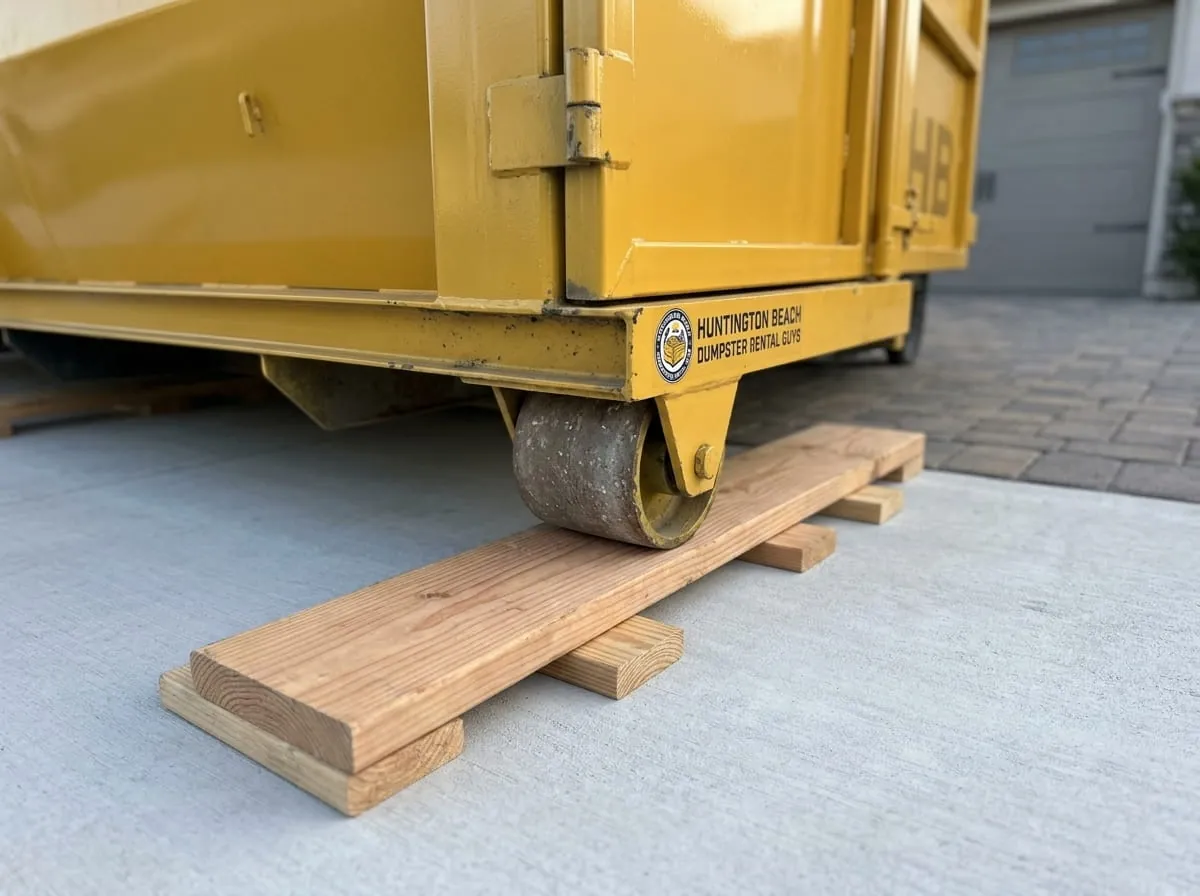
If you remember one thing from this article, make it this: never let bare steel sit directly on your driveway. The single most effective protection is placing boards or plywood under the container's contact points before it comes off the truck.
We use thick planks or sheets of plywood under the rear wheels and the front rails. That does two important jobs at once. First, it spreads the load across a much larger area instead of a few pressure points, which is the whole battle when it comes to cracking. Second, it creates a physical barrier between the steel and your surface, so nothing scrapes, gouges, or stains the driveway directly.
A few dollars of plywood under the rails is the cheapest insurance you will ever buy for a driveway that cost thousands to pour. We would rather lay boards we do not strictly need than skip them once and be wrong.
A good dumpster company brings this material and lays it automatically. You should not have to ask, but it never hurts to confirm when you book. If you want to add your own protection, two-by-tens or three-quarter-inch exterior plywood under the wheel and rail positions work well.
Placement Matters as Much as Padding
Where the container sits changes how much stress your driveway takes. A thoughtful driver reads the driveway before dropping the box.
Aim for the strongest section
The thickest, best-supported part of most residential driveways is the flat apron near the garage, not the thin edges or the sloped tie-in to the street. Placing the container squarely on a solid, level section keeps the load where the slab can handle it and keeps the box from rocking.
Keep it level and centered
A container parked across a slope or half-on, half-off an edge puts uneven pressure on one corner, which is exactly where cracks start. Level placement distributes weight evenly across all the contact points and the boards beneath them.
Load with weight distribution in mind
How you fill the dumpster matters too. Spread heavy material like concrete, tile, or dirt evenly across the floor rather than piling it all at one end. A balanced load keeps pressure even on the slab and, as a bonus, makes for a safer, cleaner pickup. If you are tackling a bigger project, sizing correctly helps here as well; our 20-yard dumpster is a popular middle ground that spreads a heavy load over a solid footprint.
The SoCal Sun Factor: Hot-Weather Asphalt
This one is specific to where we live. Huntington Beach summers and inland Orange County heat can push asphalt surface temperatures well past the point where the material softens. Warm asphalt is pliable, and a heavy container with concentrated wheel loads can leave depressions or ruts in a soft blacktop driveway far more easily than in cool weather.
If you have an asphalt driveway, protection is not optional in the summer. Broad boards to spread the load are essential, and it is smart to schedule delivery for the cooler morning hours when the surface is firmer. Concrete is far more heat-stable, but even then, decorative finishes deserve care, which brings us to the next point.
Decorative Pavers and Stamped Concrete Need Extra Care
Plenty of Huntington Beach homes have beautiful stamped concrete, exposed aggregate, or interlocking paver driveways. These look fantastic and add real value, but they are more vulnerable than a plain gray slab.
Pavers can shift, sink, or crack individually under a point load, and their sand-set base can rut. Stamped and stained concrete has a decorative surface layer and a sealer that can scuff or discolor. For these surfaces we use extra plywood to bridge across multiple pavers and float the load, and we are especially careful about placement and pickup. If your driveway is decorative, tell us when you book so the crew arrives ready. Honestly, for a truly high-end paver driveway, the street may be the smarter spot altogether.
Driveway vs. Street: Where Should the Dumpster Go?
Your driveway is usually the most convenient location, and with proper boards and placement it is perfectly safe for the vast majority of homes. But the street is a legitimate option, and sometimes the better one, particularly for delicate decorative surfaces or very old, cracked slabs you would rather not risk.
The catch is that placing a dumpster on a public street in Huntington Beach typically requires a permit from the city. It is not complicated, but it does need to be handled correctly before delivery. We walk homeowners through this all the time; our guide on whether you need a permit for a dumpster in Huntington Beach lays out exactly what to expect. When in doubt, call us and we will help you decide between driveway and street based on your specific property.
What a Good Dumpster Company Does Automatically
You should not have to fight for basic care. When you rent from a professional local outfit, driveway protection is baked into the job, not an upsell. Here is what our drivers do without being asked:
- Carry and lay boards or plywood under the wheels and rails on every driveway drop.
- Read the driveway and choose the strongest, most level placement spot.
- Ease the container down slowly and controlled rather than dropping it.
- Flag any pre-existing cracks or soft spots with the homeowner before setting the box.
- Ask about decorative surfaces and asphalt ahead of time and plan accordingly.
- Pick up as carefully as they deliver, since removal is just as risky as placement.
This is exactly the standard we hold ourselves to on every residential dumpster rental across Huntington Beach and Orange County. If a company shrugs at questions about driveway protection, that tells you something. You can see the full range of what we handle on our services page.
Your Driveway-Protection Checklist
A few minutes of prep on your end pairs perfectly with a careful crew. Before delivery day, run through this:
- Clear the spot. Move cars, toys, hoses, and planters so the driver has a clean, straight approach.
- Note any weak areas. Point out existing cracks, soft spots, or a thin edge so we can place the container away from them.
- Flag decorative surfaces. Tell us if you have pavers, stamped concrete, or a sealed finish, ideally when you book.
- Think about heat. On asphalt in summer, ask for a morning drop and extra boards.
- Have boards ready if you want extra. Plywood or two-by-tens under contact points never hurt.
- Plan your loading. Spread heavy debris evenly across the floor.
- Decide driveway or street. If the street is better for your property, sort the permit before delivery.
Rent With a Crew That Treats Your Driveway Like Its Own
A dumpster should make your project easier, not leave you with a cracked slab or a rust stain to deal with afterward. The fix is simple: boards under the contact points, smart placement on solid ground, careful loading, and a driver who slows down and pays attention. Do those things and your driveway comes through the rental exactly as it went in.
That is how we run every job. Call Huntington Beach Dumpster Rental Guys at (714) 475-1269 and we will get you the right container, delivered and picked up with your driveway fully protected. Have questions about your specific surface or setup? Reach out any time or just call (714) 475-1269 and talk it through with a local pro.

Founder, Huntington Beach Dumpster Rental Guys — sharing straight advice from more than 15 years of local hauling experience.